Women’s Parliamentary Caucuses Meet at Punjab Assembly for Cross-Provincial Learning Exchange
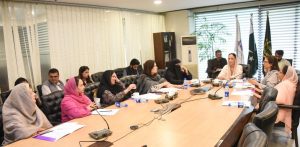
Lahore, 27 October 2026 – A delegation from the National Assembly of Pakistan participated in a cross-provincial learning exchange at the Provincial Assembly of the Punjab, bringing together representatives of the Women’s Parliamentary Caucuses (WPCs) of Balochistan, Sindh and the National Assembly to strengthen institutional collaboration and promote women’s parliamentary leadership.
Organised in collaboration with UN Women, the exchange provided a platform for parliamentary representatives to share experiences, discuss institutional frameworks and explore practical approaches to strengthening Women’s Parliamentary Caucuses across Pakistan.
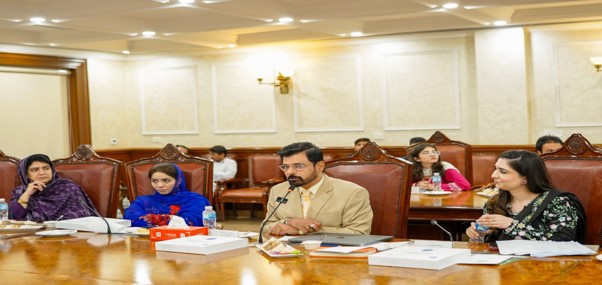
Begum Ishrat Ashraf, Convener of the Women’s Parliamentary Caucus of the Punjab Assembly, welcomed the visiting delegations. Ms. Ghazala Gola, Deputy Speaker of the Balochistan Assembly and Chairperson of the Women’s Parliamentary Caucus of Balochistan, also addressed the participants, highlighting the importance of strengthening institutional mechanisms to advance women’s parliamentary leadership.
During the opening session titled “Women’s Parliamentary Caucuses in Pakistan: Mandates, Institutional Frameworks, Working Arrangements and Parliamentary Practices,” Minail Khan, Chief Technical Advisor, National Assembly of Pakistan, delivered a detailed presentation on the mandates, institutional structures, working arrangements, opportunities and challenges faced by Women’s Parliamentary Caucuses.
Syed Shamoon Hashmi, Special Secretary, National Assembly of Pakistan, also contributed to the session, sharing insights into parliamentary practices and institutional arrangements at the national and provincial levels. The discussion provided an opportunity for participants to exchange experiences, identify common challenges and explore opportunities to strengthen the institutional effectiveness of their respective caucuses.
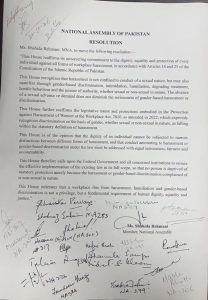
The second session, titled “National and Provincial WPCs in Action: Parliamentary Achievements, Legislative Priorities and Opportunities for Collaboration,” featured remarks by Dr. Shahida Rehmani, Secretary of the Women’s Parliamentary Caucus of the National Assembly. She emphasised the importance of enhanced coordination and collaboration among national and provincial caucuses. The session focused on parliamentary achievements, legislative priorities and opportunities for joint initiatives aimed at advancing gender-responsive policymaking and strengthening women’s participation in parliamentary processes.
A dedicated session was held to facilitate the sharing of best practices and experiences among the Women’s Parliamentary Caucuses. Representatives of the provincial caucuses of Punjab, Sindh and Balochistan delivered brief presentations on their respective achievements and milestones, while the Chief Technical Advisor presented the achievements and milestones of the National Assembly’s Women’s Parliamentary Caucus.
Towards the conclusion of the first day’s proceedings, Speaker of the Punjab Assembly, Malik Muhammad Ahmad Khan, met with the visiting delegations and commended the National Assembly for its pioneering role in establishing the first ever Women’s Parliamentary Caucus, laying the foundation for advancing women’s rights through parliamentary engagement. He also acknowledged the contributions of Begum Ishrat Ashraf, currently Convenor of the Women’s Parliamentary Caucus of the Punjab Assembly, who was part of this historic initiative during her tenure in the National Assembly. The Speaker expressed hope that the ongoing learning exchange among national and provincial parliaments and their respective caucuses would further strengthen institutional collaboration, facilitate the sharing of best practices and translate into meaningful and lasting outcomes.