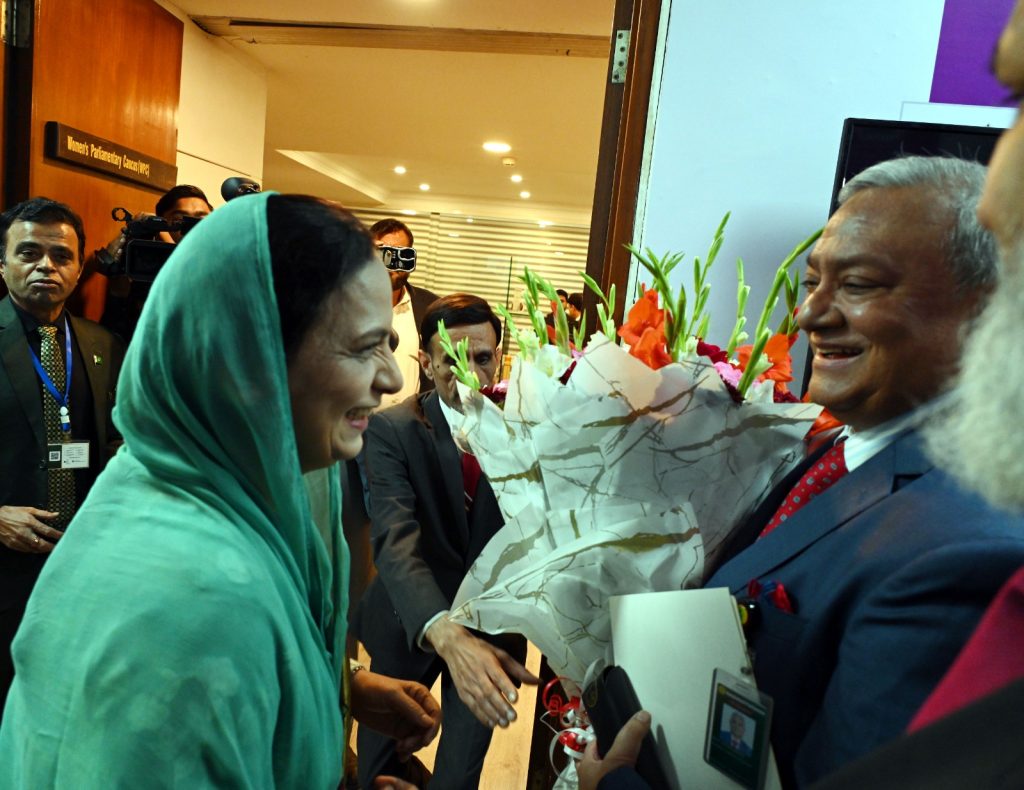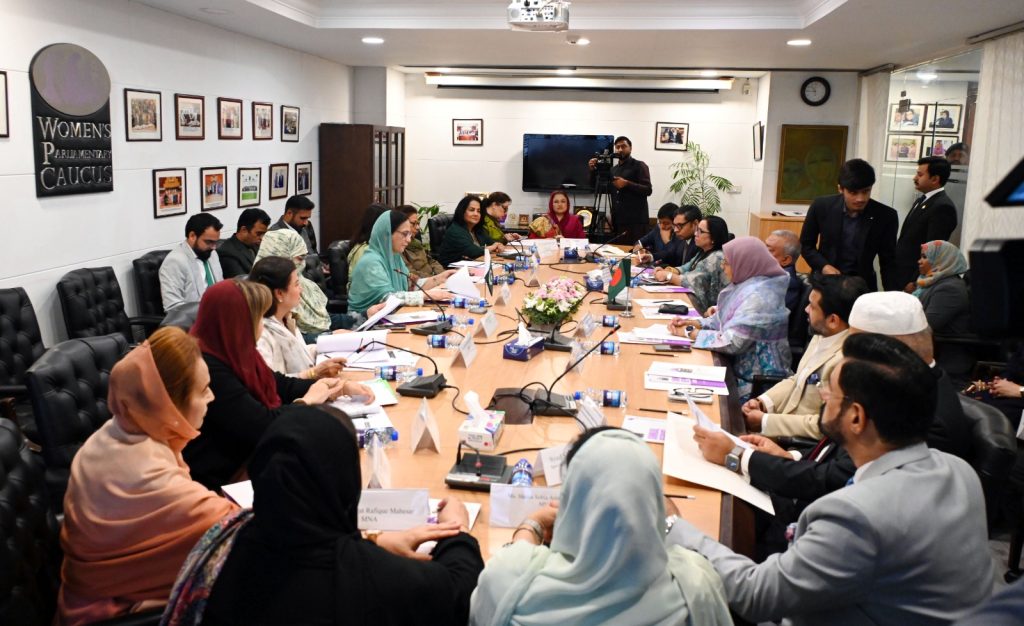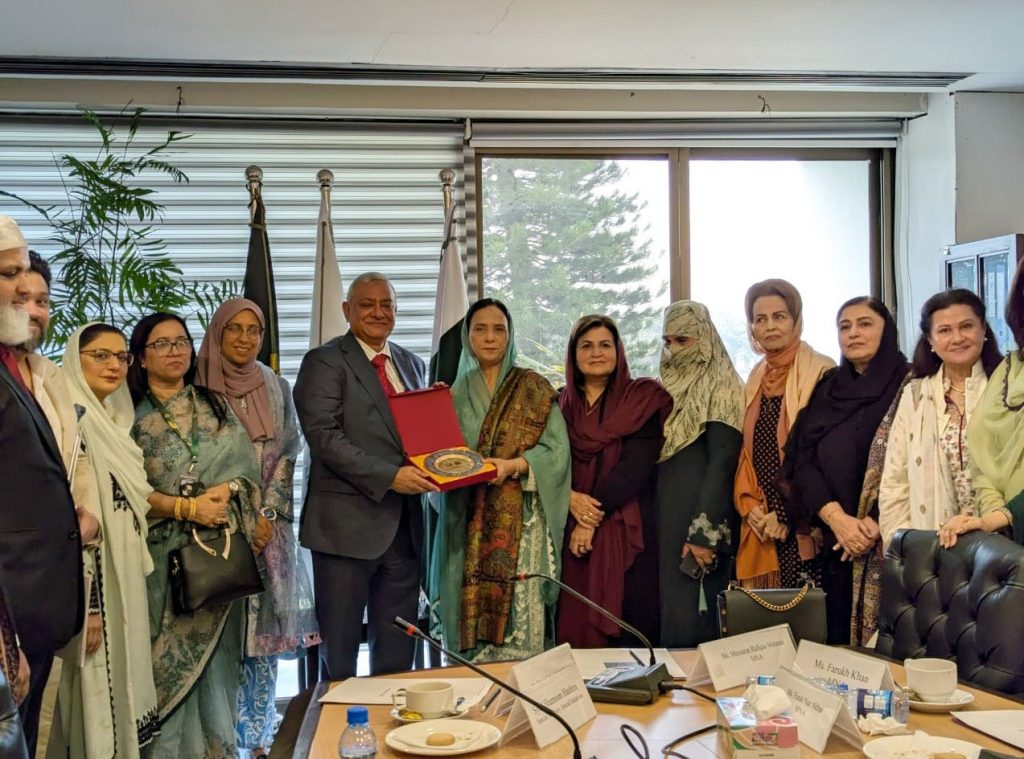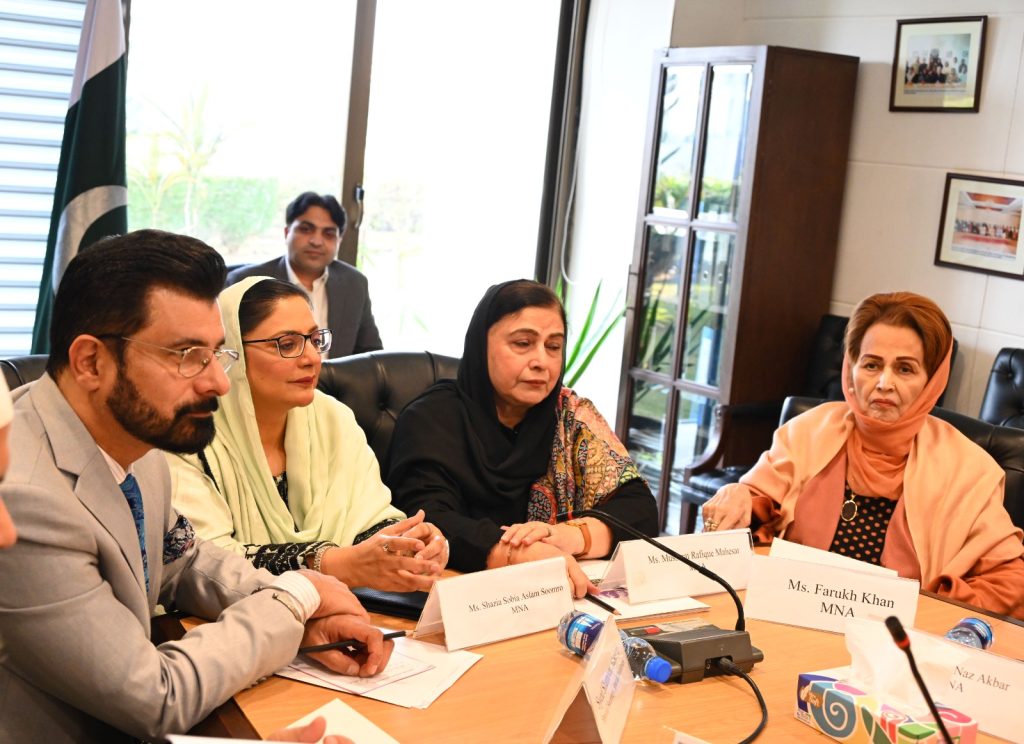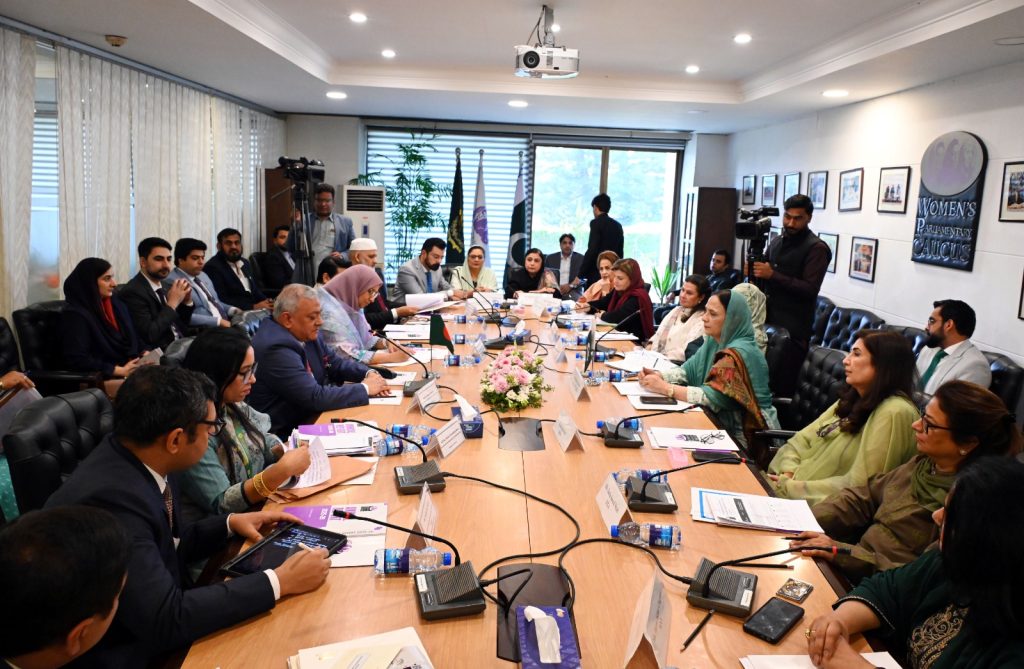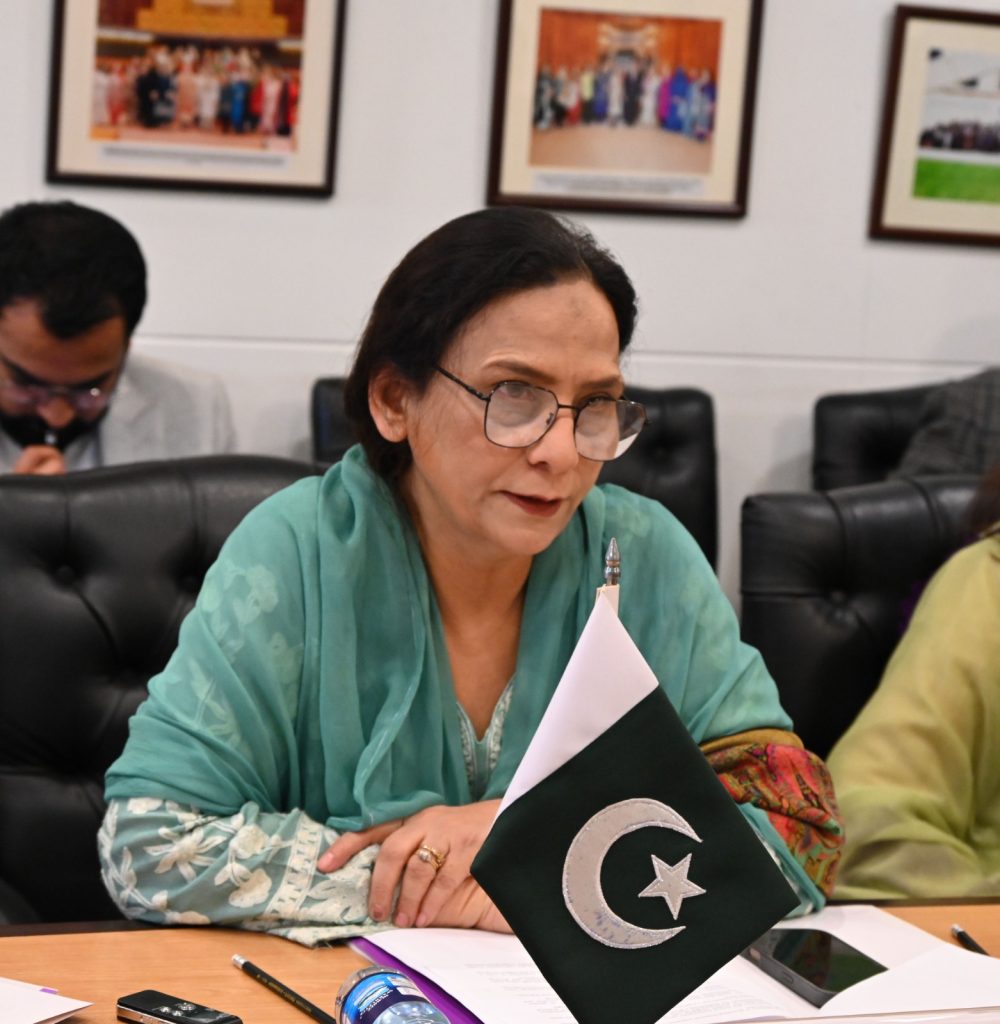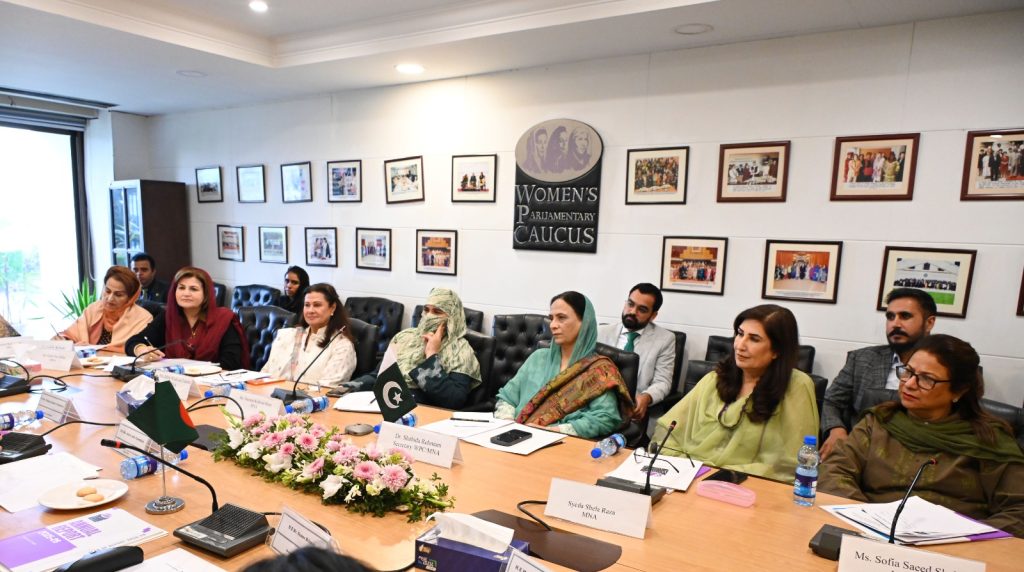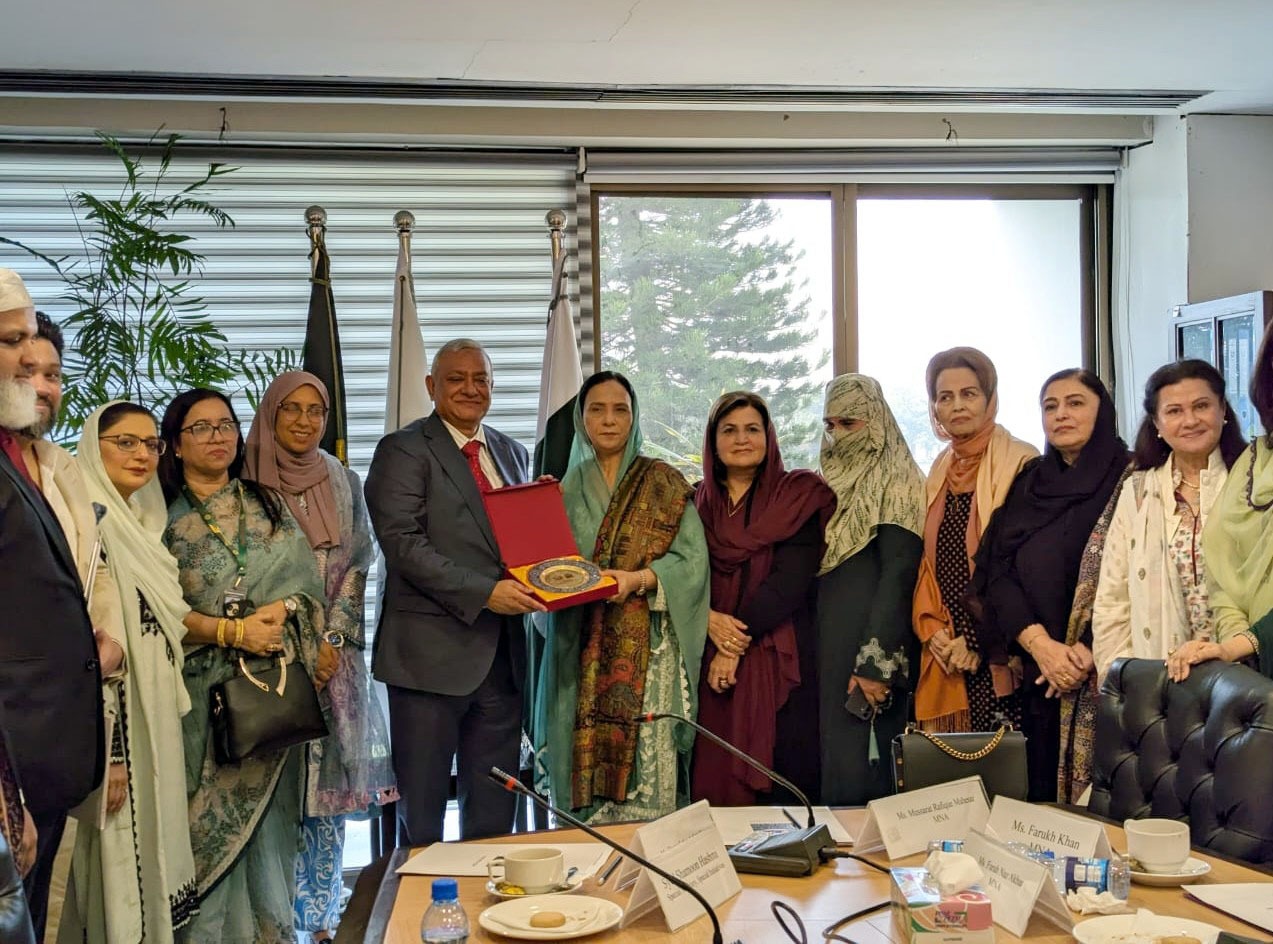
The Women’s Parliamentary Caucus (WPC) of the National Assembly of Pakistan held an interactive meeting with the first-ever parliamentary delegation of Bangladesh visiting Pakistan, led by the Honourable Speaker Hafiz Uddin Ahmad, Bir Barkam at Parliament House, Islamabad, to explore opportunities for strengthening bilateral parliamentary cooperation, promoting women’s political participation and advancing gender equality through institutional collaboration.
Secretary of the Women’s Parliamentary Caucus,
Dr. Shahida Rehmani, MNA, welcomed the Bangladeshi delegation and highlighted the longstanding commitment of Pakistan’s WPC to promoting women’s representation, legislative reforms and gender-responsive parliamentary processes.
Secretary WPC, Dr. Shahida Rehmani offered Pakistan’s support and institutional experience to facilitate the establishment of a multiparty Women’s Parliamentary Caucus in Bangladesh. She proposed sharing the WPC’s institutional framework, Terms of Reference (ToRs), operational mechanisms and experience of bringing women parliamentarians from different political parties together on a common platform.
The Bangladeshi delegation expressed appreciation for Pakistan’s offer of cooperation and shared its interest in establishing a multiparty Women’s Parliamentary Caucus.
The discussions also covered opportunities for mutual learning in several priority areas, including addressing child marriage, violence against women, women’s political representation, technology-facilitated gender-based violence, parliamentary oversight and legislative reforms. WPC offered to share its experience in gender-responsive budgeting, post-legislative scrutiny, parliamentary research and strengthening women’s participation in parliamentary decision-making.
An important highlight of the meeting was the proposal to revive the South Asian Regional Women Parliamentarians’ Network, building on an earlier regional initiative discussed among women parliamentarians of South Asian countries. Participants emphasised the importance of developing a sustainable regional platform to facilitate legislative learning, exchange of best practices and collective advocacy on issues affecting women.
The Bangladeshi delegation welcomed the proposal and expressed interest in engaging women parliamentarians from other regional countries, including Sri Lanka, Nepal, Bhutan and the Maldives, to explore opportunities for broader regional cooperation.
The meeting also addressed concerns regarding the exploitation, trafficking and domestic violence faced by Bangladeshi women migrant workers. The Bangladeshi delegation highlighted the importance of stronger inter-agency coordination and dedicated support mechanisms, including helplines, to protect women from exploitation and abuse.
To ensure continuity and effective follow-up, participants proposed designating focal persons from both Parliaments, organising regular virtual engagements and facilitating annual reciprocal parliamentary visits. The establishment of a small core group of women parliamentarians was also proposed to take forward the bilateral cooperation and regional networking initiative.