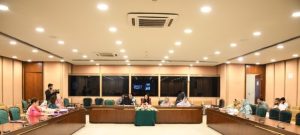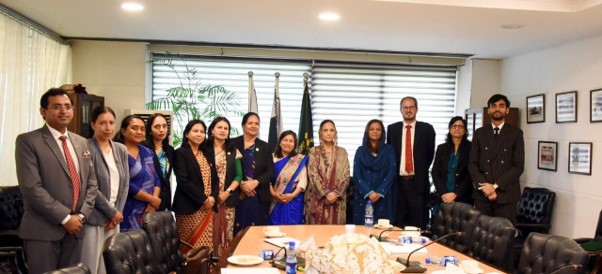
Islamabad, 19 August 2025: The Women’s Parliamentary Caucus (WPC) of Pakistan hosted a high-level delegation of women parliamentarians and civil society representatives from Nepal at the National Assembly, Islamabad. The exchange, facilitated by Friedrich-Ebert-Stiftung (FES), centered on sharing best practices and lessons learned in advancing Gender-Responsive Budgeting (GRB) in South Asia.
Welcoming the Nepali delegation, Dr. Shahida Rehmani, Secretary of the WPC & MNA, highlighted the efforts of Pakistan’s leadership in institutionalizing gender-sensitive reforms. She underscored the significance of GRB in ensuring that national resources align with the needs of women and marginalized groups. “This exchange is not only about budgets; it is about ensuring that women’s voices shape national priorities, resources, and policies,” she said.
The Nepali parliamentarians shared their ongoing initiatives, including mandatory quotas for women at various levels of governance, scholarship schemes for girls, reduced taxation for property registered in women’s names, and subsidized loans for women entrepreneurs. They also reflected on the challenges in activating a parliamentary caucus in Nepal, noting the critical role Pakistan’s WPC has played as a pioneer in the region.
From Pakistan’s side, Chairperson of the Special Committee on Gender-Mainstreaming & MNA, Dr. Nafisa Shah emphasized the complementary role of the WPC and the Gender Mainstreaming Committee in advancing reforms to address discriminatory laws and close the gender gap. Senator Fauzia Arshad highlighted Pakistan’s progress in combating child marriage, strengthening inheritance rights, criminalizing honor killings, and mainstreaming gender across legislative priorities.
The meeting also reviewed Pakistan’s Gender Budgeting Strategy 2023, the Federal Budget 2025–26 consultations, and the Gender Budget Tagging methodology applied to track allocations for social services, economic empowerment, gender-based violence response, and climate resilience.
The exchange concluded with a call for stronger collaboration between women parliamentarians of both countries, including a reciprocal visit of Pakistan’s WPC to Nepal.